

A recent study shows that on average, only 1%-3% of site visitors make a purchase. This leaves business owners and marketers with a dilemma on how to lead prospects to purchase their products or services. This is where retargeting comes in.
The people who visit your site for the first time but leave without buying anything will be lost forever unless you can bring them back. One of the most effective ways to bring people back to your site is through retargeting.
As customers go through various stages before making a purchase, marketers use retargeting as an important tool to connect with prospects, increase sales, and build customer loyalty. Let us dig deeper into retargeting and how it drives prospects to make a purchase.
What is Retargeting
As a business owner, you know advertising plays a very important role in getting your business on top of the competition, as well as in driving more sales.
But sometimes, customers just aren’t ready to purchase for various reasons. One way to remind them about their initial interest in your products or services is through retargeting.
Retargeting is a type of digital advertising that can help business owners keep their brand in front of bounced traffic. It is a marketing strategy designed to help businesses reach the site visitors who don’t convert right away.
Brand retargeting allows you to remind shoppers about your brand and bring them back to your website or app to complete their purchase.
Retargeting means reaching out again to those customers who once visited your website or app after they leave your website. It allows you to retarget your prospects and customers by showing the same product or relevant ads on other online platforms they visit.
How Retargeting Works
Retargeting uses cookie technology to follow your audience all over the web. It is somehow a programmatic way of reaching your audience.
It works with multiple digital marketing mediums, including paid search, display, email, and social. The retargeting campaigns can be done with the help of Google Ads, Facebook retargeting, LinkedIn Ads, and other retargeting marketing tools.
How Retargeting Looks
Before customers decide to buy, they need to feel like they know and understand your brand. Thus, retargeting is really effective if you want to build brand trust and loyalty.
Retargeting starts to work the moment someone visits your website to check out the cool stuff you offer. Once the visitor leaves your website, he will start to see your ads on other pages he visits. He is reminded of your products, so he returns to your store to buy.
Example:
If a potential customer abandons a shopping cart without completing the order, you can use retargeting to show an ad for the product he recently views on another website he visits. By showing your products again through an ad, there is a greater chance for successful conversion to meet your marketing and revenue goals.
Let’s take a closer look.
John, a frequent shopper, browses products on your website from his computer. He views several items, adding some to the cart but leaves without checking out the order. A few days later, John is surfing through her mobile phone and sees an ad for the product he viewed from your site and some other related items he hadn’t seen before. He’s then reminded of your brand. Intrigued by the ad he sees, he returns to your website or app to view the products and other offers to make a purchase. This is retargeting at work.
Retargeting vs Remarketing
Retargeting and remarketing are somewhat the same, as they have the same goal, which is to convert prospects to real customers. But they differ in the way they reach audiences or prospects.
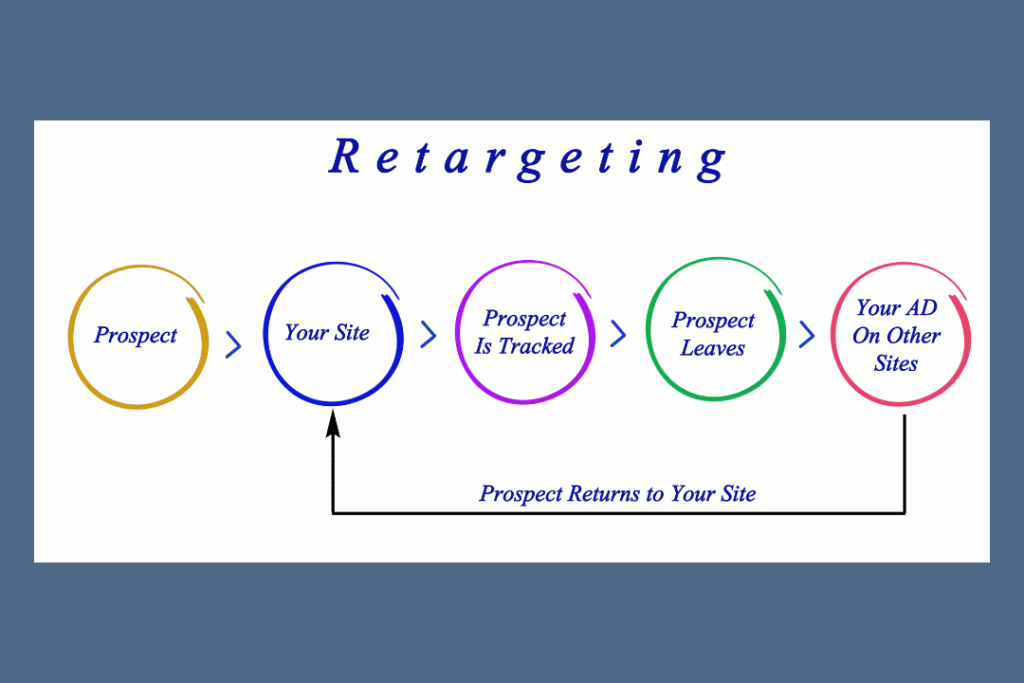
Retargeting mainly uses paid ads to target prospects who visited your website or social media pages. It attempts to bring site visitors back to buy via the display retargeting ads or via the native ads shown on other sites or apps.
Remarketing, on the other hand, mainly uses email as a tool to target people who have already done business with you. It attempts to bring the visitors back to your site, but through email.
The Importance of Retargeting
Retargeting is important because it allows your brand to be at the top of the mind of the customer. Most importantly, it is a proven effective technique when it comes to getting more customers and increasing sales.
Retargeting is definitely an important marketing strategy for the top 3 reasons.
1. Brand Awareness
Retargeting constantly reminds potential customers and previous clients about your brand, your products, and your services. It consistently connects you to them and is top of mind.
2. Personalized Marketing
Retargeting allows you to show your products or services to customers who are already interested in your brand, thus making a personalized connection between your customers and your brand.
3. Increased Conversion Rates
The retargeting strategy ensures brand visibility when the interested customer is ready to buy.
Retargeting Cost
The cost of your retargeting campaign definitely depends on your marketing budget. It depends on the cost of each ad placement and on the budget you allocate. Of course, the value you get depends on the pricing model offered and your specific goals.
Normally, retargeting campaigns are offered on a CPM or CPC basis.
CPM is best if your goal is brand awareness, but CPC is the best choice if you want to increase sales revenue, as you only pay when someone clicks on the retargeting ad.
Bottomline
There is no doubt that retargeting is one of the most effective digital marketing strategies, especially in driving sales conversions and increasing ROI, as it focuses on people who have already shown interest in the brand. Yet, retargeting works best if it is part of a larger marketing strategy.